
Frankfurt airport – replacement of 1960s pipes
Location:
Frankfurt/Main - airport
Build time:
2015 - 2019
Client:
Hydranten-Betriebs OHG, Frankfurt
Frankfurt airport – replacement of 1960s pipes
Design & build contract for the modernization of the aviation fuel system, including the replacement of legacy pipes with a high-pressure DN 500 kerosene pipeline network.
Main services
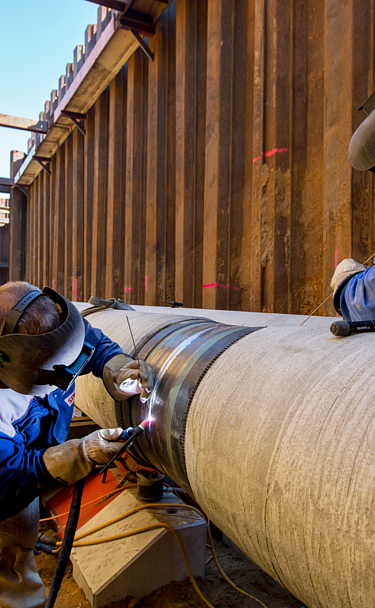
The modernization of Frankfurt airport involves a critical infrastructure project centered on the replacement of 1960s pipes to meet contemporary safety and efficiency standards. Our main services for this large-scale upgrade include the expert laying of DN 500 kerosene pipelines, spanning a total length of approximately 3,000 meters. This technical scope also encompasses the specialized installation of equipment for shaft structures, ensuring the fuel distribution network remains accessible and secure for long-term operations.
Technical Services
Executing high-pressure utility work within one of Europe’s busiest aviation hubs requires advanced technical features and a focus on precision. To ensure the highest level of quality assurance, the project is subject to continuous TÜV monitoring, providing independent safety verification of all kerosene pipeline construction.
Our engineering team utilizes specialized techniques such as pulling pipes into pipe jacking tunnels with diameters up to DN 2000, allowing for significant subterranean upgrades without disrupting surface-level logistics. The project also involves delicate connection work on existing pipes, integrating the new DN 500 system into the airport’s legacy fuel infrastructure.
A primary constraint and priority throughout the project is the constant consideration of flight operations. All installation and connection phases are strictly synchronized with airport schedules to ensure that infrastructure replacement occurs seamlessly without impacting active aviation traffic or ground handling services.