Wastewater and sludge treatment
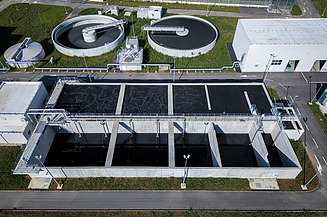
In this context, the treatment and drying of the resulting sewage sludge play a crucial role. Reducing the sludge volume by dewatering techniques like solar sludge drying or sludge incineration leads to significant cost savings in terms of handling, transportation, and disposal. At the same time, the recovery of valuable resources - particularly nutrients such as phosphorus - is becoming increasingly important, both from an economic and an environmental sustainability perspective. The biogas that is produced during the treatment process can be used to produce renewable electricity and thereby increase the overall energy efficiency of our plants.
Our service range for wastewater and sludge treatment:
-
Aerobic sludge treatment
Aerobic sludge treatment uses oxygen from the ambient air to stabilize organic matter and significantly reduce sludge volume. Through biological degradation, microorganisms convert pollutants into carbon dioxide, water, and biomass, resulting in lower odor emissions and improved sludge quality. Aerobic stabilization provides a reliable and solution designed to reduce sludge volumes and improve treatment performance for reducing excess sludge.
-
Anaerobic sludge treatment
Anaerobic sludge treatment stabilizes organic material in the absence of oxygen while generating biogas as a valuable renewable energy source. It reduces sludge quantities, lowers disposal costs, and improves the overall energy balance of wastewater treatment facilities. Modern digesters ensure reliable process control and high gas yields, contributing to sustainable plant operation. One of the key advantages is the production of biogas from waste sludge, thereby contributing to the goal of achieving net energy neutrality of the plant – a key goal for state of the art sites.
-
Municipal wastewater treatment
Municipal wastewater treatment removes organic matter, nutrients, and solids to protect public health and the environment. A combination of mechanical, biological, and chemical processes ensures high effluent quality that meets strict regulatory standards. Advanced solutions like nutrient removal and filtration support long-term management of water resources in line with regulatory requirements. The working principle focuses on automizing the plant and online control for the operation of the station, meeting current state of the art systems. Our systems are designed for efficiency, reliability, and adaptability to future urban growth.
-
Industrial wastewater treatment
Industrial wastewater treatment focuses on removing complex pollutants such as heavy metals, chemicals, oils, and high-strength organic loads. Tailored process solutions ensure compliance with industry-specific regulations and enable safe discharge or water reuse. Technologies range from physical-chemical treatment to advanced biological systems and membrane filtration. This approach improves operational safety and supports efficient industrial production processes.
-
Sewerage networks
Sewerage networks are essential infrastructure for safely transporting wastewater from households and industries to treatment facilities. Proper design ensures optimal hydraulic performance, minimizes infiltration and exfiltration, and reduces the risk of overflows. Dedicated care is taken in refurbishment of existing networks to meet current standards. Modern monitoring and control systems help improve network efficiency and detect issues early. Reliable sewer systems contribute to long-term public health and environmental protection.
-
Plant operation and maintenance
To guarantee long-term plant stability and efficiency, we also provide comprehensive operational management services. From process monitoring to maintenance and commercial operation, we ensure safe, sustainable, and cost-effective operation of wastewater and sludge treatment facilities.
-
Pressure boosting stations
Pressure boosting stations ensure stable and sufficient water pressure within supply networks or specific industrial and municipal applications. They compensate for elevation differences, long pipeline distances, and variable demand patterns. Using energy-efficient pumps and automated control systems, these stations optimize performance while minimizing operating costs. Robust system design guarantees reliable operation under changing conditions.
-
Sludge thickening, dewatering & drying
Sewage sludge consists of over 95% water. Sludge thickening significantly reduces the sludge volume by removing this excess water. This leads to lower energy demand, reduced transport and disposal costs, and improved efficiency of downstream processes such as digestion, drying, and thermal treatment. In addition, thickened sludge ensures more stable and reliable plant operation and is a key requirement for economical and sustainable sludge disposal.
-
Sludge incineration
One proven, effective, and reliable method for the proper disposal of sewage sludge is thermal utilisation, specifically mono-incineration. It is regarded as a proven and effective solution for disposing of excess sludge generated during the operation of wastewater treatment plants. To this end, we rely on meticulously planned, energy-processes designed to recover and reuse energy generated during operation based on the latest technical standards. This resource-efficient and sustainable process is also highly flexible in its application: from turnkey sewage sludge treatment plants to individually designed, decentralized on-site solutions. Together with our customers, we select and plan the best option for people and the environment.

Boost your plant capacity with LINPOR® technology
LINPOR® by STRABAG is a smart solution for municipal and industrial wastewater plants, increasing cleaning capacity without building new basins - using highly porous bio-carrier cubes that double biomass and optimize sludge performance.
Explore furtherTake a look at our projects:
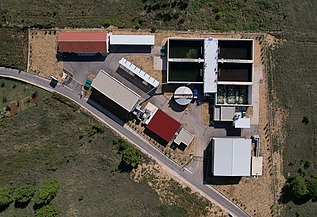
Wastewater treatment plant for Nin, Privlaka and Vrsi
The contract for "Design and construction of wastewater treatment plant, second stage of treatment WWTP Grgur” in Nin was part of the overall project “Improvement of Water & Communal Utility Infrastructure of the Nin - Privlaka - Vrsi Agglomeration" in Croatia.
Location:
Nin / Croatia
Build time:
12/2021 - 10/2025
Client:
Vodovod Vir d.o.o.
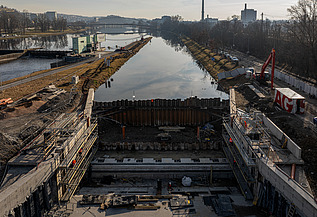
Lock of the navigation channel
Complete reconstruction and expansion of the wastewater treatment plant on Císařský Island, stage no. 0008 – compensation measures
Location:
Prague / Czech republic
Build time:
01/2024 - 09/2025
Client:
Prague Water Management Company, a.s.
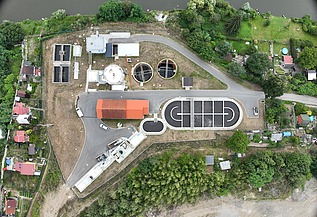
Upgrading of the wastewater treatment plant Týnec nad Sázavou
STRABAG Water modernised and expanded the wastewater treatment plant in Týnec nad Sázavou under full operational conditions, increasing capacity to 8,000 PE and delivering a future-ready, efficient, and sustainable wastewater treatment facility for the city.
Location:
Týnec nad Sázavou / Czech Republic
Build time:
07/2023 - 09/2025
Client:
Kunst s.ro. / Město Týnec nad Sázavou
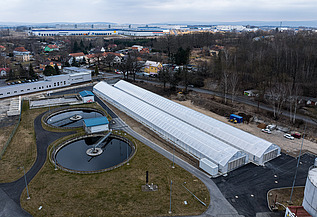
Solar sludge drying
Retrofitting of the sludge outlet at the Cheb wastewater treatment plant
Location:
Cheb / Czech republic
Build time:
05/2024 – 03/2025
Client:
CHEVAK Cheb a.s.
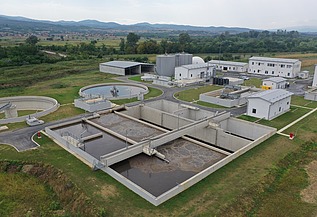
Wastewater treatment plant Vranje
Design, Construction and Trial Operation of the new Wastewater treatment plant as integrative part of the “Water and Sewerage Programme in Medium Sized Municipalities in Serbia-Programme III”
Location:
Vranje / Serbia
Build time:
05/2018 – 02/2022
Client:
PUC Vodovod Vranje
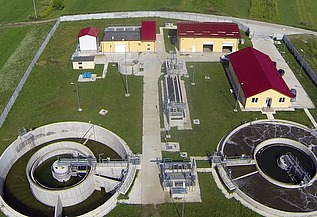
Wastewater Treatment Plant Moinești
Modern wastewater treatment for a growing city - STRABAG upgraded and expanded the Moinești plant to meet European standards and ensure reliable long-term operation.
Location:
Moinești / Romania
Build time:
2014 - 2016
Client:
Compania Regională de Apă Bacău
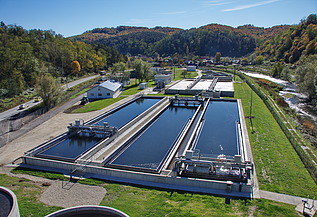
Wastewater Treatment Plant Reșița
Modern wastewater treatment for improved environmental standards - STRABAG delivered a high-efficiency plant designed to meet EU requirements and support sustainable urban development.
Location:
Reșița / Romania
Build time:
08/2008 - 11/2010
Client:
SC AQUACARAȘ SA

Your water project starts here
Connect with our experts and find your water contact.
Go to contactfinder